






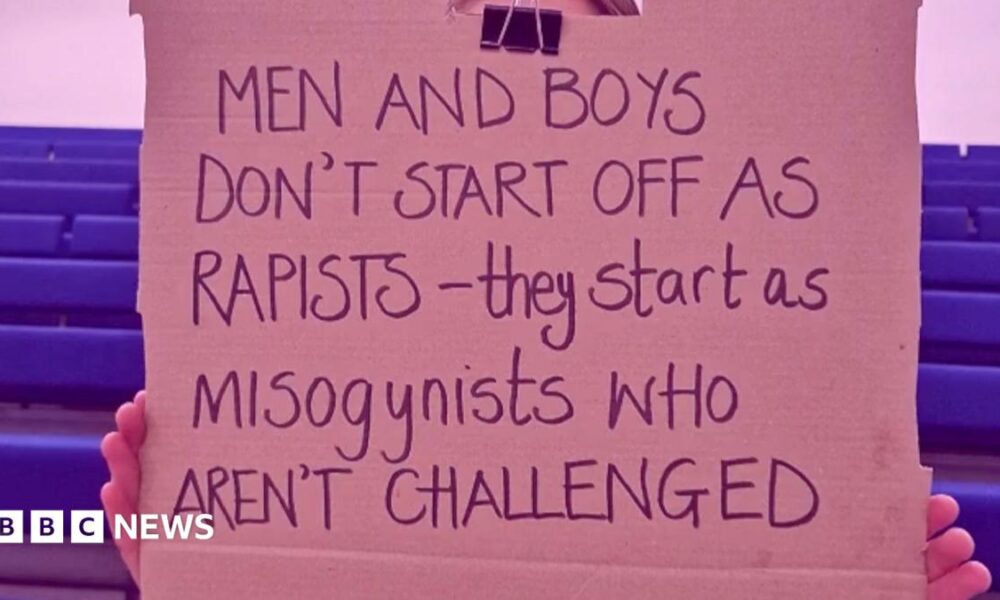
Influencers discussing female inferiority or how to be a “high-value” male – an online term referring to physically attractive, wealthy men – were the most common source of content promoting misogyny, seen by nearly half (47%) of teenagers surveyed.
A third had seen content that encouraged or depicted violence towards women and girls, while almost a third (32%) had seen AI-generated sexual images of women or girls.
Jeremiah said he thought social media had “a big impact” on how boys acted.
He said putting safeguarding rules in place or parents restricting their children’s social media use might help reduce these behaviours.
Emily said she felt frightened when she saw “men in their 30s” on…


No Comment! Be the first one.