





National Milk Day: India’s Dairy Sector Emerges as a Pillar of Rural Prosperity, Nutrition and Women’s Empowerment

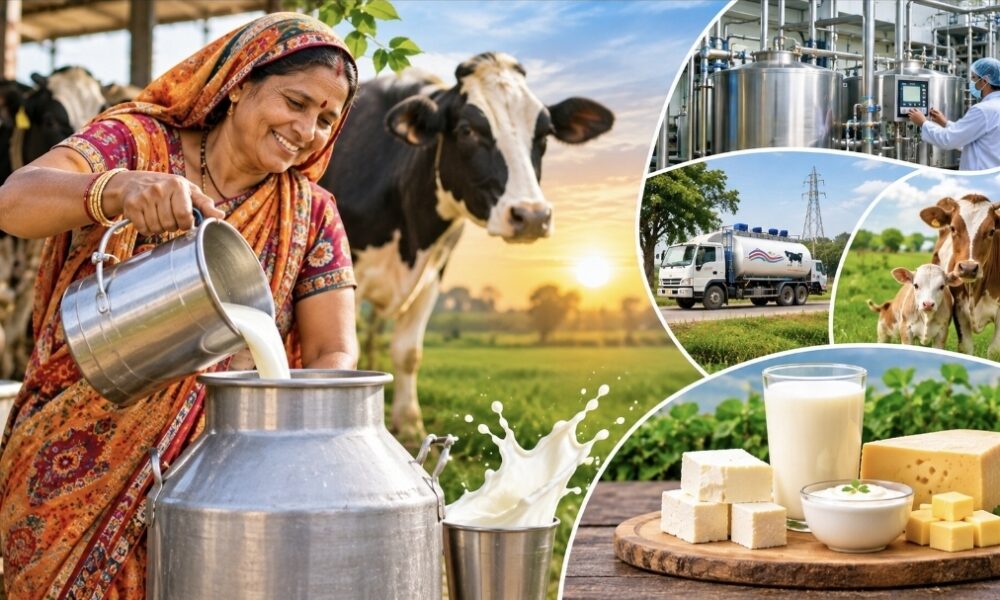
From strengthening household nutrition to supporting millions of rural livelihoods, India’s dairy sector has emerged as a vital pillar of the country’s agricultural economy. As India prepares to celebrate National Milk Day on November 26, the country’s dairy journey reflects the growing strength of farmer cooperatives, scientific livestock management and sustained growth in milk production.
Observed annually on the birth anniversary of Dr. Verghese Kurien, widely regarded as the Father of India’s White Revolution, National Milk Day honours his contribution to transforming India’s dairy industry and recognises the millions of farmers who sustain the country’s position as the world’s largest milk producer.
India’s milk production increased by 69.41 per cent, from 146.31 million tonnes in 2014-15 to 247.87 million tonnes in 2024-25, registering an annual growth rate of 5.41 per cent. The country now accounts for nearly one-fourth of global milk production. Per capita milk availability has also risen from 319 grams to 485 grams per day during the same period.
The sector is equally significant for rural livelihoods and women’s empowerment. Dairying supports approximately 8.5 crore rural households, with women accounting for nearly 70 per cent of the dairy farming workforce.
Cooperative institutions remain central to this growth. India’s dairy network includes 22 milk federations, 241 district cooperative milk unions and approximately 2.45 lakh village-level societies, covering 1.65 crore dairy farmers.
A major push is being provided through White Revolution 2.0, launched in December 2024, which aims to increase milk procurement by dairy cooperatives by 50 per cent over five years. By October 2026, 24,097 new dairy cooperative societies had been established, while 31,394 existing societies had been strengthened.
Government initiatives such as the National Programme for Dairy Development, Rashtriya Gokul Mission and Animal Husbandry Infrastructure Development Fund are further supporting milk procurement, scientific breeding, veterinary services and modern processing infrastructure.
Technology is also transforming livestock management. Under the Bharat Pashudhan database, more than 39.42 crore Pashu Aadhaar identification numbers have been issued, enabling digital records of livestock vaccination, breeding and treatment.
India’s dairy sector is also expanding its international footprint, exporting 97,524.82 metric tonnes of dairy products worth 407.12 million US dollars in 2025-26.
As the country marks National Milk Day, India’s dairy story stands as a testament to the strength of collective action, farmer-led institutions and women’s participation. Beyond milk production, the sector continues to contribute to nutritional security, rural employment and the vision of a stronger and more self-reliant rural economy.
-Pib
The post National Milk Day: India’s Dairy Sector Emerges as a Pillar of Rural Prosperity, Nutrition and Women’s Empowerment appeared first on DD India.





No Comment! Be the first one.