






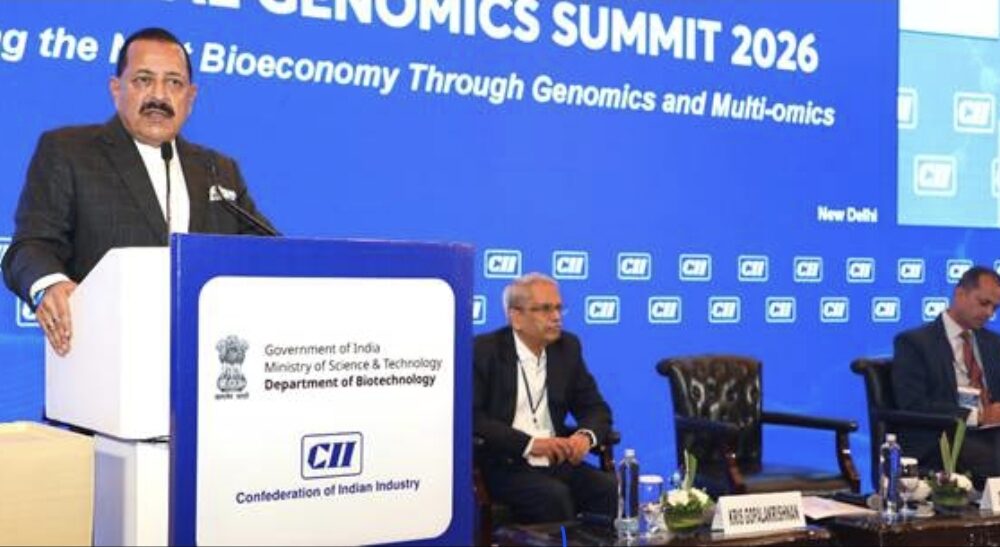
India’s bio-economy is projected to reach $300 billion by 2030, driven by the rapid expansion of biotechnology startups, growing research capabilities and increasing industry participation, Union Minister of State for Science and Technology Dr Jitendra Singh said on Wednesday.
Addressing the CII Global Genomics Summit 2026 in New Delhi, the Minister called upon industry leaders, startups and investors to explore emerging opportunities in genomics, multi-omics and advanced biotechnology, describing biotechnology as a key driver of the next industrial revolution
Highlighting India’s progress in the sector, Dr Singh said the country’s biotechnology startup ecosystem had expanded from around 50–60 startups in 2014 to nearly 11,000 at present. During the same period, India’s bio-economy grew from approximately $10 billion to nearly $195 billion.
He said biotechnology was emerging as a strategic technology platform with applications across healthcare, agriculture and economic development. The convergence of DNA sequencing, computational biology, artificial intelligence and advanced omics technologies, including genomics, proteomics, transcriptomics and metabolomics, is expected to transform disease research and enable more personalised healthcare.
Emphasising India’s advantage in genomic research, the Minister highlighted the country’s genetic diversity as an important resource for scientific innovation. He referred to the Genome India Project, under which whole-genome sequencing of 10,000 individuals representing 80 population groups has been undertaken, creating a valuable foundation for future research and development.
Dr Singh also underlined the potential of biotechnology beyond healthcare, particularly in agriculture and livestock. Advanced genomic applications can help improve crop productivity, nutritional quality, resistance to pests and diseases, and climate resilience. In livestock, these technologies can support improved breeding practices and disease surveillance.
The Minister highlighted the government’s BioE3 Policy, aimed at promoting biotechnology for the economy, environment and employment. The establishment of bio-foundries and supporting infrastructure is intended to strengthen research, encourage startups and facilitate the development of commercially viable biotechnology products.
Referring to India’s growing capabilities in healthcare innovation, he cited the development of the country’s DNA vaccine against COVID-19, which was supplied to 30 countries, along with progress in HPV vaccines, haemophilia research and cost-effective CAR-T cell therapy for cancer.
Calling for greater private-sector participation, Dr Singh stressed the need for increased investment in research and development and stronger partnerships between industry, startups and government research institutions. He also highlighted the ₹1 lakh crore Research, Development and Innovation Scheme as an important mechanism to encourage private investment in high-impact technologies.
He urged industry leaders to explore Corporate Social Responsibility funding for scientific research, particularly in areas such as cancer and diabetes, and called for greater coordination to address regulatory challenges in biotechnology.
-Pib
The post India’s Bio-Economy Projected to Reach $300 Billion by 2030: Dr Jitendra Singh appeared first on DD India.





No Comment! Be the first one.