




Can a partitioned presidency save COP31? Turkiye and Australia’s high-stakes gamble
Severe friction points have emerged at the COP31 summit. As thousands of scientists, corporate lobbyists, environmental groups and Indigenous leaders gather for the climate summit in Turkiye, a...

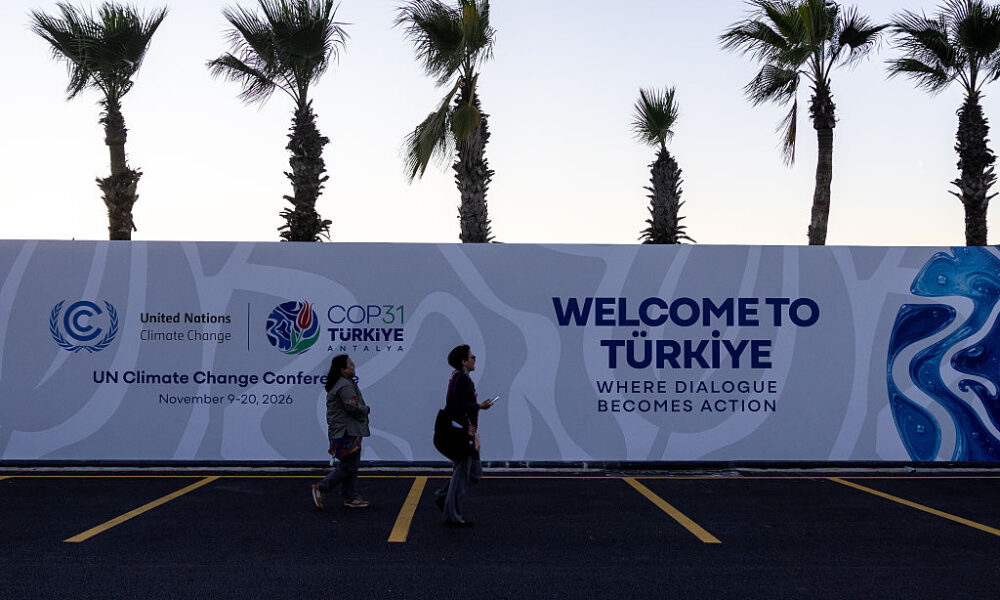
Severe friction points have emerged at the COP31 summit. As thousands of scientists, corporate lobbyists, environmental groups and Indigenous leaders gather for the climate summit in Turkiye, a massive geopolitical rift has formed.
Developing nations, led prominently by Ethiopia, the upcoming host of COP32, are furious over a limited focus on direct climate finance within the summit’s industrial roadmap. Critics argue that the highly-publicised electrification push is fundamentally incomplete because it completely fails to specify how that new power should actually be generated. With roughly a third of all global electricity still produced by burning heavy coal, activists are making a final push, urging for the protection of civic space so that civil society is not sidelined by heavy industrial and fossil fuel interests.
The binding negotiations will ultimately live or die on money but the geopolitical backdrop has shifted violently. With global focus consumed by ongoing conflicts involving the U.S., Israel and Iran — combined with surging domestic energy prices — hard, legally-binding targets to phase out fossil fuels are not expected to feature prominently on the main floor. Furthermore, the U.S. has largely disengaged from the multilateral process under Trump — a political vacuum that has allowed China to step into a far more assertive role.
Despite these brewing battles, the formal action-agenda pushes forward with specific, targeted milestones. Turkiye’s core priorities for the summit are aimed at driving green industrialisation through four distinct pillars:
— Raising electricity’s share of global final energy consumption to 35 per cent by 2035;
— increasing circular material use rate of 15 per cent and halving the projected growth of municipal waste;
— cutting energy intensity in buildings by 25 per cent by 2035;
— and harnessing responsible Artificial Intelligence to accelerate clean technology deployment.
However, executing this agenda requires navigating a diplomatic experiment never before seen in 30 years of global climate politics. After a stubborn, two-year diplomatic deadlock that threatened to derail the multilateral process entirely, the U.N. has engineered an unprecedented split in executive leadership. Under a complex bilateral compromise to avoid a humiliating failure, Turkiye and Australia agreed to a formal partition of power. Turkiye holds the official presidency, taking total responsibility for the physical hosting, complex operations, and massive logistics in Antalya. Australia steps onto the world stage as the President of Negotiations, wielding exclusive, absolute authority to draft, steer and amend the text of the highly-sensitive treaty.
Under strict U.N. regulations, host consensus must be entirely unanimous within designated regional blocs. If this fragile administrative experiment fails, the summit by default strips both nations of power and relocates to Bonn in Germany. Past emergencies have forced venue changes though; such as COP23 moving to Germany when Fiji lacked infrastructure or COP25 shifting to Madrid due to civil unrest in Chile.
Analysts warn that this planned, structural division at this year’s summit is a massive gamble. It marks the very first time core executive responsibilities have been deliberately split in the agency’s three-decade history — a set-up that could create immense bureaucratic complications when co-hosts attempt to bring down the final gavel together.
Australia is now tasked with anchoring consensus on an elusive new global finance goal alongside efforts to at least triple adaptation funding by 2035.
With both co-hosts balancing massive domestic fossil fuel industries against their roles as global climate guides, a highly volatile and critical two weeks lie ahead.
Ramesh Ramachandran is a senior consulting editor with D.D. India
The post Can a partitioned presidency save COP31? Turkiye and Australia’s high-stakes gamble appeared first on DD India.



No Comment! Be the first one.