





PM Modi inaugurates first SCO Civilisational Dialogue Forum, calls for cultural cooperation to promote global peace
Prime Minister Narendra Modi on Friday inaugurated the first Shanghai Cooperation Organisation (SCO) Civilisational Dialogue Forum at Purana Qila in New Delhi, calling for stronger cultural exchanges...

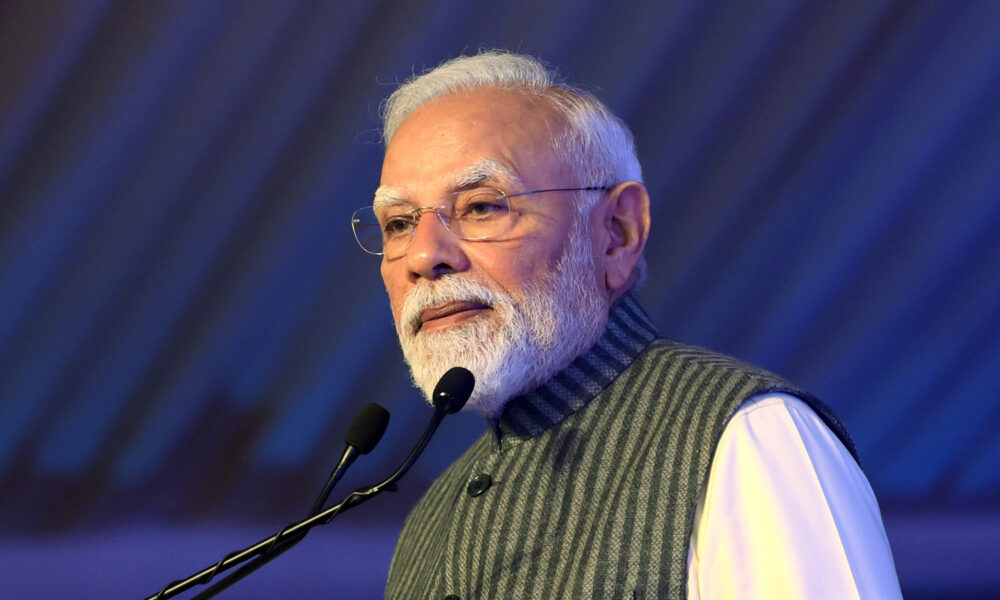
Prime Minister Narendra Modi on Friday inaugurated the first Shanghai Cooperation Organisation (SCO) Civilisational Dialogue Forum at Purana Qila in New Delhi, calling for stronger cultural exchanges and greater cooperation among member countries to promote mutual understanding and global peace.
Addressing dignitaries, SCO ministers, ambassadors, high commissioners, scholars, artists and other guests from member states, PM Modi said civilisational connections were particularly significant at a time when global discussions were dominated by war and unrest. Cultural connections, he observed, provide a strong foundation for world peace and complement the SCO’s expanding cooperation in security, economic relations and connectivity as the organisation marks its 25th anniversary.
“Our shared civilizational experiences will play an important role in uniting the world,” the Prime Minister said.
He described the forum as more than a ceremonial gathering, saying it could become a platform for giving direction to the world. While empires had redrawn geographical boundaries, civilisational dialogues had transformed and enriched global thought, he noted.
Purana Qila provides a historic setting for civilisational dialogue
Highlighting the significance of the venue, PM Modi said Purana Qila is a cultural heritage site whose history scholars trace back thousands of years to the Mahabharata era.
He referred to the cultural performances, Vedic recitations, presentations on Buddhist philosophy and depictions of Hanuman ji’s journey organised at the venue. These presentations, he said, showcased India’s cultural heritage while conveying universal messages of love, unity and human welfare that transcend geopolitical boundaries.
The Prime Minister expressed hope that the inaugural forum would lay the foundation for a new tradition that future generations would remember.
Ancient trade routes and exchanges shaped shared heritage
Tracing the history of cultural interaction across regions, PM Modi referred to trade links between the Indus Valley Civilisation and Mesopotamia dating back around 5,000 years. He also highlighted the Silk Route and other trade networks that connected India, China, Central Asia and Eurasia, enabling merchants, scholars, travellers and religious figures to exchange ideas and knowledge.
He recalled the contributions of Buddhist monks and scholars such as Faxian, Xuanzang, Yijing and Kumarajiva, who helped carry knowledge and Buddhist texts across regions. Institutions such as Nalanda, along with cultural centres in Kucha and Dunhuang, played an important role in these exchanges.
“Empires have certainly changed the maps of the world, but civilizational dialogues have changed the ideas of the world and enriched them,” he said.
The Prime Minister observed that knowledge may evolve in its expression as it travels across regions, but its ability to illuminate societies remains unchanged.
Citing examples of literary and cultural exchange, he said India’s Panchatantra travelled into Persian and Arabic traditions as Kalila wa Dimna, becoming popular across generations. Similarly, the Ramayana enriched local cultures, performing arts and literature in Southeast Asia, including Cambodia, where it is known as Reamker.
PM Modi also highlighted the contribution of Indian mathematical knowledge to global learning. The mathematical ideas of Indian scholar Brahmagupta reached Baghdad, where scholars such as Al-Khwarizmi contributed to the further development of mathematics.
Architecture, music and spiritual traditions reflect cultural connections
PM Modi pointed to shared legacies in architecture and music as further evidence of long-standing cultural exchanges. He referred to the connections between Central Asian Maqam and Indian Raga traditions, the influence of Sufi traditions on Qawwali in India, and the impact of Central Asian garden traditions from Samarkand and Herat on the Charbagh style.
He emphasised that such exchanges must continue through open and sustained cultural engagement, highlighting the role of the summit and similar initiatives in keeping these connections alive.
PM Modi calls for digital preservation and translation of ancient texts
Emphasising the opportunities offered by 21st-century technology, the Prime Minister said people in countries that once took months to reach through traditional routes can now connect within seconds.
Digital platforms, he noted, have made knowledge-sharing, cultural exchange and international collaboration easier than ever before. He urged SCO member countries to make full use of these opportunities.
Drawing attention to the thousands of years of heritage preserved in museums, libraries and archives across member nations, PM Modi proposed cooperation in digitising and translating ancient manuscripts, rare texts, historical documents and artefacts. He also called for joint research projects to uncover new dimensions of shared history.
Such initiatives, he said, would allow young people anywhere in the world to gain a deeper understanding of the cultural heritage of other countries.
Noting that many important literary and intellectual works remain available in only a limited number of languages, the Prime Minister said artificial intelligence could accelerate their translation and make them accessible to wider audiences.
Joint exhibitions, heritage circuits and artist exchanges proposed
PM Modi outlined several avenues for expanding cultural cooperation among SCO countries. These include joint exhibitions organised by museums and cultural institutions, exchanges of scholars and researchers between universities, and the development of heritage circuits and cultural routes connecting Silk Route and Buddhist heritage sites.
He also suggested promoting cultural tourism, organising joint cultural festivals and facilitating exchanges among artists. Such efforts, he said, would give citizens greater opportunities to experience and understand one another’s cultures.
The Prime Minister stressed that younger generations must take the responsibility of carrying civilisational dialogue forward in the coming decades. Describing today’s youth as technologically adept and eager to understand the world, he called for greater opportunities for them to engage with different languages, literature and cultural traditions.
He also underlined the importance of involving local artists and artisans. Young artists, writers and filmmakers, he said, could use digital media and other creative platforms to communicate shared heritage to new generations.
‘Vasudhaiva Kutumbakam’ as the foundation of global wellbeing
Connecting India’s cultural philosophy with the broader objectives of the forum, PM Modi recalled the traditional Indian belief of Vasudhaiva Kutumbakam, which means the entire world is one family.
He said Indian prayers at the conclusion of rituals seek the welfare of all beings and the wellbeing of the entire world. The aspiration for national and individual welfare, he observed, is closely linked to global welfare, with mutual harmony forming the basis of collective wellbeing.
The Prime Minister said mutual goodwill depends on trust, which can be strengthened by recognising shared values and commonalities. Referring to India’s experience of embracing diverse languages, lifestyles and traditions, he said diversity could become a source of unity when approached with openness and generosity.
“When we adopt this generous perspective, then our diversity itself becomes the basis of our unity,” he said.
Concluding his address, PM Modi invoked the Vedic call, ‘Sangachchhadhwam Samvadadhwam Sam Vo Manansi Janatam’, which urges people to walk together, converse together and achieve harmony of thought. He congratulated participants on the inaugural SCO Civilisational Dialogue Forum and wished them productive deliberations.
(PIB)
The post PM Modi inaugurates first SCO Civilisational Dialogue Forum, calls for cultural cooperation to promote global peace appeared first on DD India.


No Comment! Be the first one.