




India, Egypt explore deeper cooperation in digital governance, AI and emerging technologies
India and Egypt are looking to expand bilateral cooperation in digital governance, emerging technologies and administrative capacity building, with Union Minister Dr. Jitendra Singh highlighting...

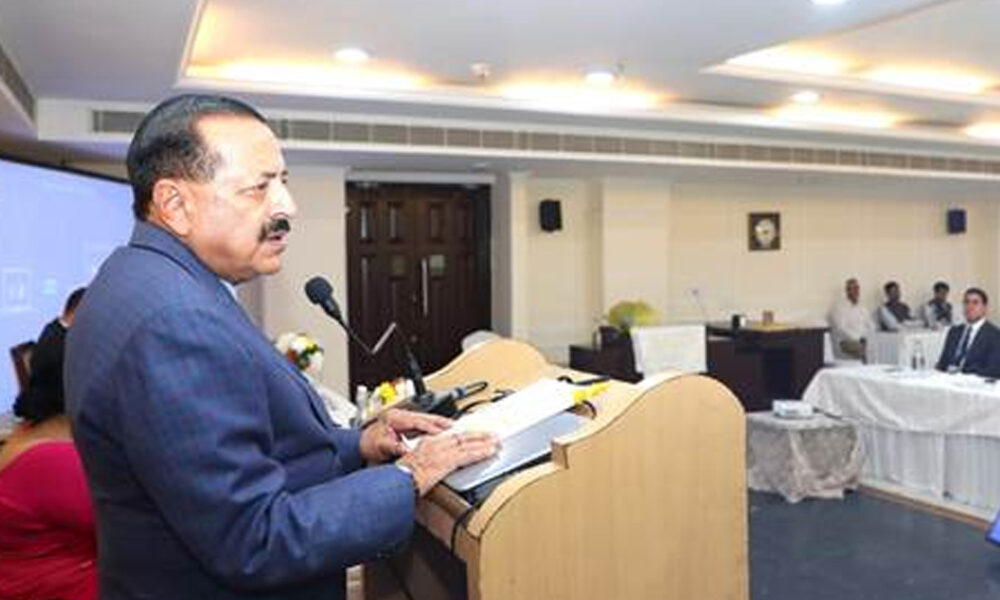
India and Egypt are looking to expand bilateral cooperation in digital governance, emerging technologies and administrative capacity building, with Union Minister Dr. Jitendra Singh highlighting India’s governance innovations and civil services framework as potential areas of mutual learning between the two countries.
The Minister made the remarks on Thursday while interacting with a delegation of 25 Deputy Governors from Egypt participating in the first Special Capacity-Building Programme on Smart Governance for Deputy Governors of Egypt, organised by the National Centre for Good Governance (NCGG) in New Delhi.
Emphasising the importance of institutional cooperation, Singh said India’s administrative system has evolved into one of the world’s largest and most robust civil services frameworks, often described as the “steel frame of governance”. Given India’s diversity and varied regional governance requirements, the country has developed extensive administrative experience and institutional practices that could be shared with partner nations.
He stressed that capacity-building programmes should promote two-way learning, with future training modules and engagements tailored to the specific priorities and requirements of participating countries.
India-Egypt Strategic Partnership Offers Scope for Greater Engagement
Highlighting the longstanding relationship between India and Egypt, Singh said the two countries have maintained warm diplomatic ties since the early years of India’s Independence. Bilateral relations have gained further momentum since the elevation of the partnership to a Strategic Partnership during Prime Minister Narendra Modi’s State Visit to Egypt in June 2023.
The relationship has expanded across economic, political, cultural and strategic areas, reflecting growing engagement between the two countries.
On economic cooperation, the Minister noted that bilateral trade reached US$ 7.26 billion in FY 2021–22 and stood at US$ 4.8 billion in FY 2024–25. More than 500 Indian companies are registered in Egypt, with investments exceeding US$ 4.5 billion, highlighting the significant presence of Indian businesses in the Egyptian economy.
He also underlined the importance of capacity building as a key pillar of bilateral relations. More than 1,500 Egyptian officials have benefited from the Indian Technical and Economic Cooperation (ITEC) programme and other Indian training initiatives.
Singh also referred to the Maulana Azad Centre for Indian Culture in Cairo, established in 1992, which promotes cultural exchanges through activities involving Hindi, Urdu, Kathak and Yoga.
AI, Space Technology and Digital Payments Among Key Areas of Cooperation
Highlighting India’s transformation in technology-driven governance, Singh identified Artificial Intelligence (AI), space technology, biotechnology and other emerging fields as promising areas for deeper India-Egypt cooperation.
He said technological collaboration could support infrastructure development, including the construction of roads and bridges, housing initiatives and disaster preparedness, while strengthening the technological capabilities of both countries.
Sharing India’s experience in citizen-centric governance, the Minister explained the functioning of the Centralised Public Grievance Redress and Monitoring System (CPGRAMS), which records a weekly grievance disposal rate of more than 95–97 per cent.
He highlighted how India combines Artificial Intelligence with human intervention to make grievance redressal more responsive to citizens’ needs and expectations.
Singh also showcased the Digital Life Certificate initiative, which enables pensioners to complete life certificate verification through mobile-based face authentication linked to Aadhaar in approximately 40 seconds.
Another key initiative discussed was Mission Karmayogi and its iGOT digital learning platform, which facilitates role-based capacity building for government officials and promotes outcome-oriented public service delivery.
The Minister also outlined administrative reforms aimed at reducing file movement time, improving transparency and minimising human intervention in recruitment processes.
Responding to possibilities for adapting Indian governance practices in Egypt, Singh identified India’s digital payments ecosystem, particularly the Unified Payments Interface (UPI) and RuPay, as potential areas of bilateral cooperation. He said India’s experience in developing a large-scale digital transactions ecosystem could offer valuable opportunities for both countries.
India Reaffirms Commitment to Tailored Capacity-Building Programmes
Reaffirming India’s commitment to strengthening institutional cooperation, Singh said capacity-building initiatives with Egypt would be expanded and customised according to the country’s specific requirements.
He invited the Egyptian delegation to share its experiences, suggestions and priority areas, stressing that sustained engagement and reciprocal knowledge exchange would help build more meaningful and effective partnerships.
Dr. Surendra Kumar Bagde, Director General of the National Centre for Good Governance, welcomed the delegation and described the programme as an important initiative, being the first specialised capacity-building programme organised for senior Egyptian officials.
He said the programme was designed to facilitate meaningful discussions on areas of common interest and expressed the NCGG’s willingness to continue institutional engagement and knowledge sharing with Egypt.
Ahmed Essameldeen Moussa, Head of the Egyptian delegation and Deputy Governor of Ismailia Governorate, thanked Singh, the NCGG leadership and the programme team for their support and hospitality.
Speaking on behalf of the 25 Deputy Governors, he said the programme reflected the historic friendship and Strategic Partnership between India and Egypt. He highlighted discussions on public infrastructure, anti-corruption strategies, urban local bodies and Mission Karmayogi, along with institutional visits, and expressed confidence that the engagement would serve as a bridge for sustained cooperation in governance.
The Special Capacity-Building Programme is being conducted from November 16 to 21, for representatives from 25 Egyptian Governorates. It aims to familiarise participants with India’s administrative practices, governance innovations, institutional frameworks and public service delivery models.
The programme is organised by the National Centre for Good Governance under the Department of Administrative Reforms and Public Grievances, Ministry of Personnel, Public Grievances and Pensions, and sponsored by the Ministry of External Affairs under the Indian Technical and Economic Cooperation framework.
(PIB)
The post India, Egypt explore deeper cooperation in digital governance, AI and emerging technologies appeared first on DD India.




No Comment! Be the first one.