





Fears for ancient woodlands as pressure grows to build more homes
Ancient woodland campaigners fear a drive to build more houses could put some of England’s oldest habitats under increasing pressure, despite government protections designed to prevent their...

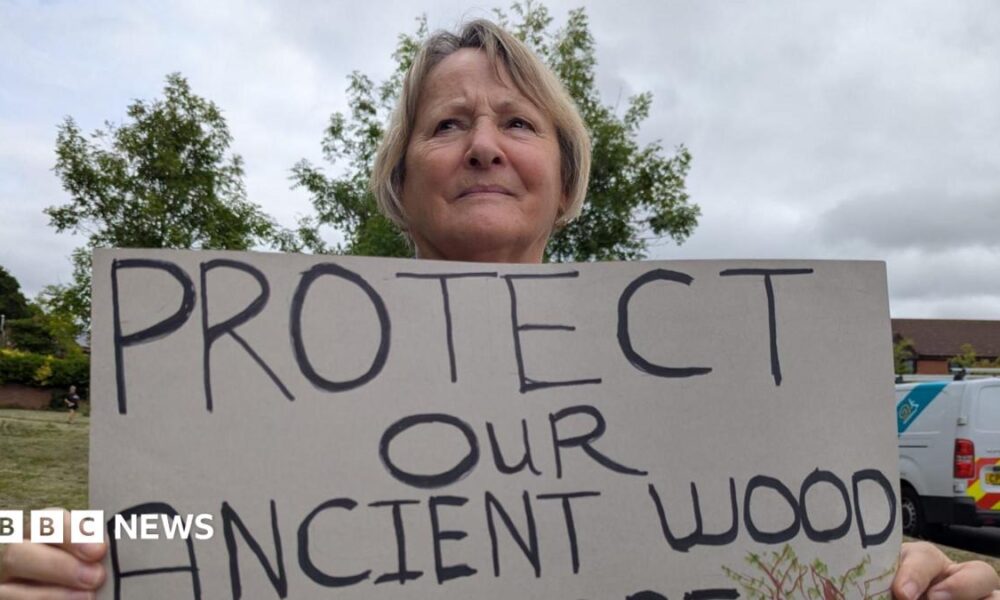
Ancient woodland campaigners fear a drive to build more houses could put some of England’s oldest habitats under increasing pressure, despite government protections designed to prevent their loss.
The protected areas can only be built on or near in “wholly exceptional circumstances”, according to planning policy.
But the Labour government’s pledge to build 1.5 million new homes by the end of 2029 and the recent creation of the “grey belt” – areas of poorer quality open spaces that can be built on – are leaving ancient woodlands at threat, campaigners say.
A spokesman for the Ministry of Housing, Communities and Local Government said ancient woodlands continued to benefit from “very clear and strong protections”.
But the BBC has found dozens of individual sites which feature planned developments immediately next to the woods.
Among them are approved plans for 450 homes within yards of Hook Wood in Gillingham, Kent, which residents fear will have a devastating impact on local wildlife.
“We are already seeing cases where the existing protections are struggling,” said Ancient Woodland UK chairwoman Lucy Graebe-Watson.
“We have seen a rise in concerns and alerts from local groups since recent planning reforms.”
An ancient woodland is classed as existing continuously since at least the year 1600. The sites, described as “irreplaceable by Graebe-Watson, are considered some of the UK’s richest habitats for wildlife.
The National Planning Policy Framework (NPPF), external guidelines for local councils deciding planning applications in England say woods can be built on in “wholly exceptional circumstances”, such as major infrastructure projects like HS2.
But Graebe-Watson said the grey belt policy made it more likely areas directly next to ancient woodland – previously protected under green belt laws – could be developed.




No Comment! Be the first one.