





Mohan Bhagwat calls for national unity, Swadeshi and balanced development in Vijayadashami address
RSS chief Mohan Bhagwat on Tuesday called for stronger national unity, social harmony and self-reliance, urging citizens to translate these principles into everyday conduct as the organisation...

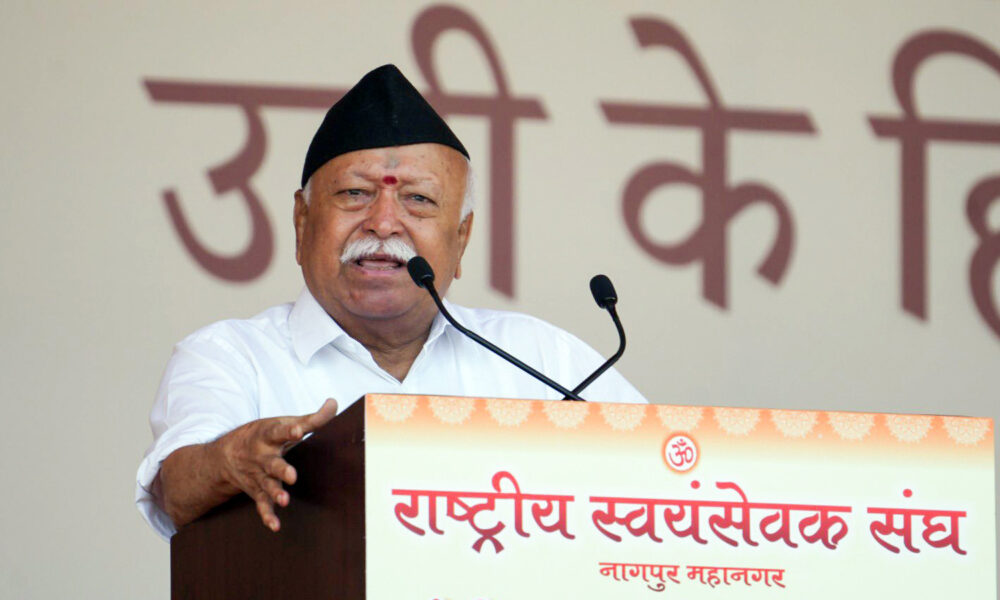
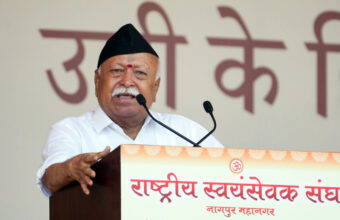
RSS chief Mohan Bhagwat on Tuesday called for stronger national unity, social harmony and self-reliance, urging citizens to translate these principles into everyday conduct as the organisation concluded its year-long centenary celebrations.
Addressing the annual Vijayadashami gathering at Reshimbagh ground in Nagpur, Bhagwat outlined priorities ranging from family values and environmental protection to responsible technology use, youth development and the prevention of substance abuse.
He said the Rashtriya Swayamsevak Sangh’s work over the past century had focused on awakening self-awareness and strengthening India’s unity through its identity and cultural ethos. Referring to the Constitution’s Preamble and its opening words, “We, the people of India”, he described a shared sense of belonging as essential to holding together a diverse society.
Bhagwat urged people to strengthen this emotional bond while respecting differences in language, region, caste, faith, customs and food habits. Fear and insecurity, he said, could push people towards narrow identities and weaken social cohesion.
He also asserted that there should be no hesitation or objection to singing “Vande Mataram” in its entirety, describing the national song as a symbol of patriotism and unity. Recalling its role in resistance to the partition of Bengal, he highlighted that divisive thinking and appeasement had contributed to the country’s eventual Partition.
Explaining the RSS’s “Panch Parivartan” initiative, Bhagwat emphasised social harmony, family awakening, environmental responsibility, civic discipline, self-awareness and the adoption of Swadeshi. He said these principles must become lasting habits rather than remain a short-term campaign.
“This is not a one-year programme,” he said, urging volunteers and citizens to bring about changes in conduct through practical action.
Presenting preliminary figures from the centenary outreach, Bhagwat said RSS workers had contacted 10,19,88,511 households across 4,61,527 villages and 41,076 urban settlements.
He said 1,117 programmes for prominent and intellectual citizens had drawn 4,26,497 participants. Goodwill meetings were held across 5,036 talukas, while youth conventions attracted more than 39.25 lakh young people. The figures could rise when the final report was presented to the organisation’s executive committee, he added.
RSS workers had also visited Western countries to explain India, Hindutva and the organisation’s objectives and address what he described as misconceptions. Plans were being prepared to sustain these exchanges beyond the centenary year.
Bhagwat highlighted that India’s growing global importance brought a responsibility to offer an inclusive model of development. He said materially prosperous societies were struggling with environmental damage, weakening family relationships, excessive consumption and the management of diversity.
Describing what he called the Hindu civilisational perspective, Bhagwat said it emphasised spirituality, universal brotherhood and humanity without requiring people to abandon their forms of worship, languages or regional traditions. Building an organised and strong Hindu society, he maintained, was compatible with respect for all faiths and national unity.
Turning to environmental concerns, Bhagwat called for a comprehensive and balanced approach to development in the Himalayan region. Referring to the recent disaster in Nepal, he said one-sided development practices were contributing to ecological instability.
Development should protect human welfare, remain sustainable and avoid imposing costs that threatened people’s survival, he said. He also expressed grief over the Kolkata Durga Puja stampede.
On technology, Bhagwat said scientific progress was inevitable but technology must remain a tool serving society. He raised concerns about unrestricted digital content and said the government should consider appropriate measures concerning online platforms, particularly OTT services.
Parents and society also had a responsibility to help young people distinguish appropriate content from harmful material, he said.
Calling drug abuse a serious national concern, Bhagwat noted that awareness of its harmful effects did not necessarily prevent addiction. He urged timely action by the government, administration, families and communities, and stressed the need to prepare young people physically and mentally for their responsibilities.
Bhagwat also praised Captain Smit Machchhar for risking his life to protect others during an alleged attack aboard a flydubai flight. He said the pilot’s courage reflected values passed down through generations and illustrated the importance of putting principles into practice.
The RSS chief recalled the contributions of Sant Ravidas, Swami Shraddhanand and Swami Lakshmanananda Saraswati, highlighting their work in spiritual awakening, education, social harmony and service to tribal communities.
Dainik Jagran Editor-in-Chief Sanjay Gupta attended the event as chief guest. Other attendees included former Vice President Jagdeep Dhankhar, Maharashtra Chief Minister Devendra Fadnavis, Union Minister Nitin Gadkari, Maharashtra Revenue Minister Chandrashekhar Bawankule and Israel’s Consul General in Mumbai, Yaniv Revach.
Founded by Dr. Keshav Baliram Hedgewar in Nagpur on Vijayadashami in 1925, the RSS observes the festival annually.
(With agency inputs)
The post Mohan Bhagwat calls for national unity, Swadeshi and balanced development in Vijayadashami address appeared first on DD India.

No Comment! Be the first one.