





Hundreds more prisoners being freed in second phase of early release scheme
About 650 more offenders are leaving jails in England and Wales on Tuesday, in the second phase of the government’s plan to tackle the prison population crisis. The group includes offenders...

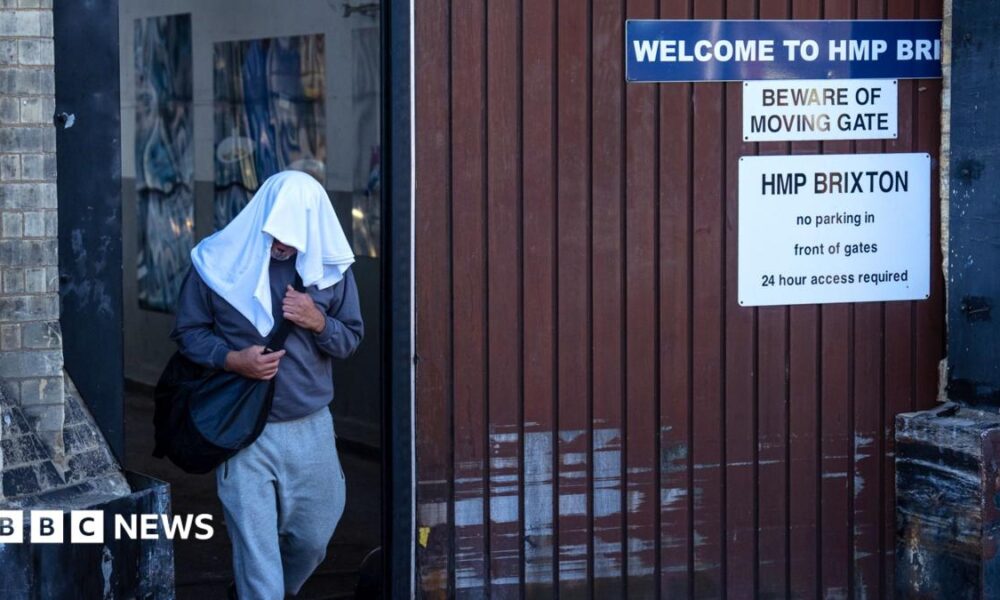
About 650 more offenders are leaving jails in England and Wales on Tuesday, in the second phase of the government’s plan to tackle the prison population crisis.
The group includes offenders serving up to two and a half years for crimes.
Under the new rules, they are leaving jail after serving a third of their sentence behind bars, rather than half.
The second wave of releases comes as the government takes its plan to radically overhaul criminal courts back to Parliament – but also as probation officers prepare to vote in a ballot that could lead to a strike over pay and workload.
Some 700 offenders left jail early on 1 October – all of whom were serving terms of less than 19 months.
Tuesday’s second stage begins the process of releasing batches of offenders serving increasingly long sentences – culminating next June with those serving more than 12 years.
Victims’ groups have raised fears about the early release scheme.
Alice Russell-Harris from the charity Refuge – which supports survivors of domestic abuse – told the BBC that domestic abuse perpetrators are among those being released.
This “will put survivors at serious risk of harm,” she said.
Even though they may walk out of prison with conditions such as electronic tagging and restriction zones, “we know that license conditions are frequently breached by perpetrators.”
Victims are worried that prisoners who walk free “will be able to continue their campaign of abuse once out of prison,” she said, adding that there are concerns about recent reports revealing that electronic tags are often not fitted on time for release.
Napo, the probation service union, said the releases have put enormous strain on its members, who are charged with monitoring the offenders in the community.
Typically, those being released should expect to be electronically tagged and subject to other monitoring conditions for the second third of their sentence.
On Tuesday, the union’s members will meet to discuss next week’s vote, which could lead to strike action. Probation officers have been offered a 5% pay rise by the Ministry of Justice (MoJ), while it had demanded 12% as part of a plan to make up for loss of earnings caused by cuts from 2010.
The MoJ says the offer is fair and has been accepted by two other unions and is twinned with a £700m investment in probation to recruit 1,300 extra officers and the roll-out of AI tools to cut the workload of monitoring offenders.






No Comment! Be the first one.