




Piyush Goyal Calls for Doubling India-UK Bilateral Trade by 2030
Doubling bilateral trade by 2030 should be a shared ambition for India and the United Kingdom, Union Minister for Commerce and Industry Piyush Goyal said, calling upon businesses in both countries...

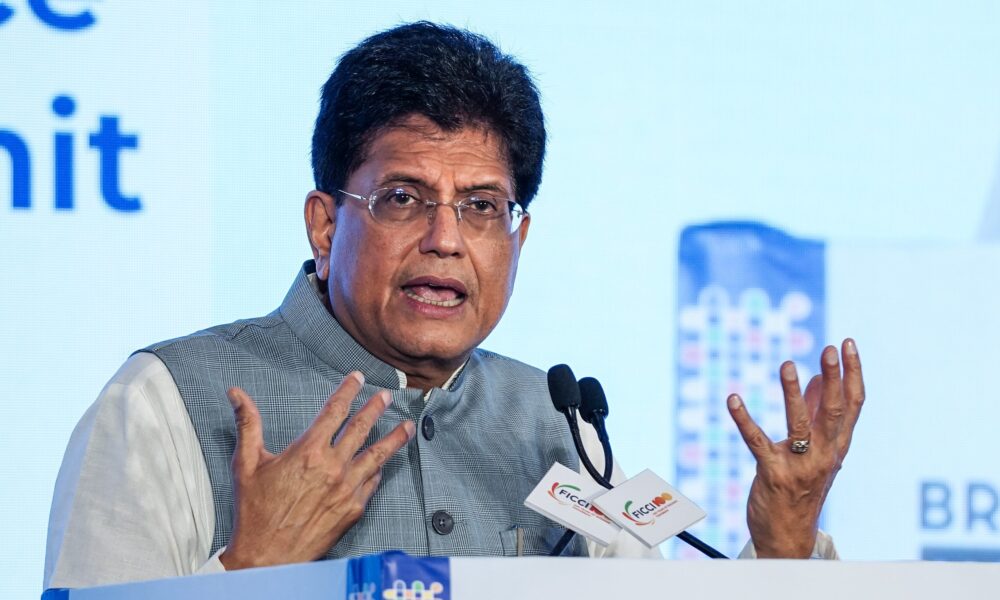
Doubling bilateral trade by 2030 should be a shared ambition for India and the United Kingdom, Union Minister for Commerce and Industry Piyush Goyal said, calling upon businesses in both countries to translate the opportunities created by the India-UK Comprehensive Economic and Trade Agreement (CETA) into expanded trade, investment, partnerships and job creation.
Addressing the JETCO Business Plenary under the 16th Session of the India-UK Joint Economic and Trade Committee (JETCO) in New Delhi on Monday, he also called for making the India-UK Vision 2035 a framework for greater economic ambition and cooperation.
CETA Opens New Opportunities for Trade and Investment
Goyal said CETA marked a major milestone in the economic partnership, providing zero-duty access to the UK market for most Indian exports while creating opportunities for UK exporters across sectors. He also highlighted opportunities in services and the potential benefits of the Social Security Double Contribution Convention in enabling competitive service delivery and improving business profitability.
Emphasising the need to translate the agreement into practical gains, the Minister said, “This agreement opens the doors businesses have to walk through.” With approximately 1,500 days remaining until the end of 2030, he urged businesses to make full use of CETA and work towards the shared target of doubling bilateral trade.
Five Priority Areas for India-UK Cooperation
Goyal said the two countries had complementary strengths that could help expand existing trade, diversify exports and develop new business opportunities. While India offers manufacturing scale, digital public infrastructure and a large talent pool, the UK brings strengths in research, design, advanced technologies and financial services, according to a press release from the Ministry of Commerce & Industry.
He outlined five priority areas for cooperation:
Infrastructure and clean energy: Joint opportunities in project development, renewable energy, transmission lines and utility financing to support sustainable growth.
Advanced manufacturing and resilient supply chains: Collaboration in electric vehicles, batteries, electronics and precision engineering to strengthen manufacturing ecosystems and supply-chain resilience.
Technology and innovation: Stronger links among research institutions, technology companies and start-ups, with greater cooperation in research and development, semiconductors, quantum computing and artificial intelligence.
Financial services: Closer collaboration between the City of London and Gujarat’s GIFT City in fintech, insurance, cross-border payments, transition finance and trade finance.
Healthcare and consumer sectors: Opportunities in generic and innovative pharmaceuticals, diagnostics, food processing and consumer goods, combining India’s affordability with the UK’s strengths in research and discovery.
The Minister stressed that skills development and training would be essential across these sectors. He called for greater investment in capacity-building and mutual understanding to help businesses take advantage of the expanding opportunities.
Scope to Expand Exports and Bilateral Investment
Highlighting existing trade complementarities, Goyal said India exported smartphones, pharmaceutical products, jewellery, textiles, leather goods, rice and other agricultural products, iron and non-alloy steel, machinery parts and automobile components. Potential UK exports to India included products across the petroleum value chain, electronics and electrical equipment, medicaments, motor cars and Scotch whisky.
He said CETA offered scope to expand these trade flows, encourage new exporters and introduce additional product lines. Goyal also highlighted investment opportunities in both directions, noting the presence of Indian companies in key UK sectors and UK companies operating in India. He said the Ministry of Commerce and Industry was willing to work towards strengthening existing frameworks and enhancing mutual recognition to facilitate closer economic cooperation.
Goyal Calls for Easier Access to CETA Provisions
The Minister stressed the need to make tariff schedules, rules of origin and documentation requirements easier for businesses to understand and follow. He called for clear guidance in plain language and, where relevant, regional languages to help businesses of different sizes and from different regions benefit from the agreement.
Referring to businesses in Tirupur in southern India and the Midlands in the UK, he said accessible guidance, including in Tamil where relevant, could help more enterprises navigate CETA requirements.
Goyal said the entry of new exporters into the UK market with new products would be an important measure of the agreement’s success. He called for regular sectoral roundtables, business delegations and participation in large-scale exhibitions, including as partner countries, to strengthen engagement between businesses in both countries.
Concluding his address, Goyal called for translating the India-UK Vision 2035 into tangible progress, guided by the principle that when nations grow together, their people prosper together.
UK Business Secretary Calls for Business-Led Implementation
UK Secretary of State for Business, Innovation, Science and Trade Jonathan Reynolds said CETA marked the beginning of sustained engagement between the two governments and their business communities. With the agreement having been in force for almost 100 days, he noted encouraging signs of businesses exploring opportunities in advanced manufacturing, clean energy, life sciences, technology, services and creative industries.
Reynolds stressed the need for practical guidance, particularly for micro, small and medium enterprises (MSMEs) and first-time exporters, on tariff reductions, rules of origin, customs procedures and regulatory requirements. He said business feedback would be addressed through CETA’s utilisation review, committees and working groups to resolve implementation challenges and facilitate trade and investment.
He emphasised that the agreement’s success would depend on businesses converting opportunities into exports, investments, technology commercialisation and job creation in both countries.
Jitin Prasada Highlights Technology Partnerships
Union Minister of State for Commerce and Industry Jitin Prasada said business missions and exchanges between industry associations would help companies identify partners, explore opportunities and strengthen commercial ties across regions.
He identified artificial intelligence, semiconductors and data centres as key areas for technological collaboration, noting that the UK’s research and development capabilities complemented India’s engineering talent, digital market and ability to deploy technologies at scale. Referring to the Technology Security Initiative agreed in 2024, he said the two countries could work together to develop trusted and affordable technologies for global markets.
Prasada called for continued government-industry engagement and said progress at the next JETCO should be assessed through tangible indicators, including partnerships signed, factories opened and jobs created.
JETCO Reviews CETA Implementation and Sets Priorities
The 16th JETCO session was the first following the signing and entry into force of CETA on July 15, 2026. The Ministers reviewed early business uptake of the agreement, bilateral trade and investment developments, and priorities for the coming year.
Both sides undertook a Joint Utilisation Review of CETA and welcomed the early use of the agreement by businesses in both countries. They also welcomed the establishment of sub-committees and working groups, along with the exchange of contact points, and agreed to develop a practical roadmap identifying priority areas and issues for further work.
The meeting coincided with a visit by seven mayors and a combined authority leader from northern England. The wider programme brought together government representatives, businesses, universities, innovators and regional leaders from both countries, alongside visits by the UK’s Secretaries of State for Scotland and for Environment, Food and Rural Affairs.
UKIBC Supports Northern England Business Mission
The UK India Business Council (UKIBC), the strategic and knowledge partner to the Great North delegation, is supporting a first-of-its-kind mayoral mission to India involving leaders from five combined authorities across northern England.
UKIBC has provided market insights, identified opportunities in priority sectors and facilitated engagement with Indian industry and government. The initiative forms part of its wider efforts to help northern English regions develop India-focused market strategies, strengthen engagement plans and build long-term partnerships with Indian businesses and institutions.
The council’s work aims to turn bilateral trade ambitions into practical programmes and sustained commercial partnerships.
-PIB inputs
The post Piyush Goyal Calls for Doubling India-UK Bilateral Trade by 2030 appeared first on DD India.




No Comment! Be the first one.