



India’s steel consumption rises 7.5% in H1 FY27; crude steel output grows 2.9%
India’s finished steel consumption rose 7.5% to 84.9 million tonnes during April–September 2026, while crude steel production increased 2.9% to 85.1 million tonnes, according to provisional Joint...

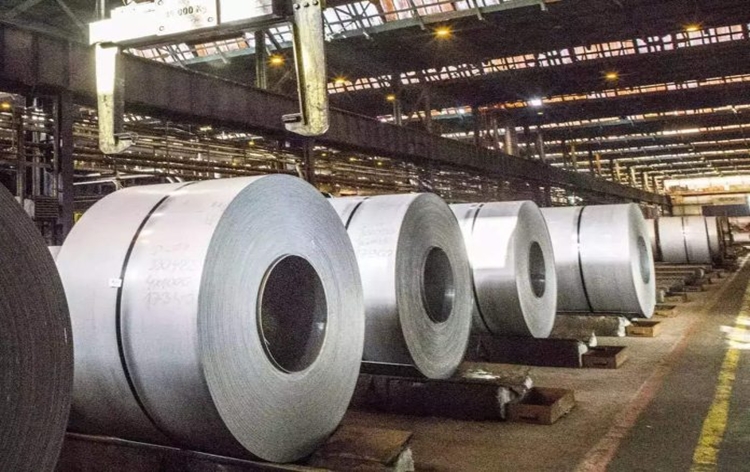
India’s finished steel consumption rose 7.5% to 84.9 million tonnes during April–September 2026, while crude steel production increased 2.9% to 85.1 million tonnes, according to provisional Joint Plant Committee data released by the Ministry of Steel on Tuesday.
The country remained a net importer of finished steel by volume during the first half of FY 2026–27, with imports increasing 23.8% and exports rising 26.2% over the corresponding period last year.
Finished steel production reached 81.8 million tonnes during the six-month period, up 3.7% from 78.8 million tonnes a year earlier. Hot metal production grew 2.5% to 48.3 million tonnes from 47.2 million tonnes, while crude steel output increased from 82.7 million tonnes.
In September, crude steel production stood at 14.1 million tonnes, registering year-on-year growth of 3.4%. Finished steel output rose 1.9% to 13.5 million tonnes, while hot metal production recorded a marginal increase of 0.2% to 7.9 million tonnes.
Finished steel consumption in September increased 8% to 14.4 million tonnes from 13.3 million tonnes a year earlier.
India’s annual crude steel capacity stood at 222.9 million tonnes. The top seven producers – SAIL, RINL, NSL, TSL Group, AM/NS, JSL (JSPL) and JSW Group – accounted for 117.4 million tonnes of capacity. They produced 47.7 million tonnes of crude steel, 44.8 million tonnes of hot metal and 44.1 million tonnes of finished steel during April–September.
The remaining producers had an annual crude steel capacity of 105.4 million tonnes and contributed 37.4 million tonnes of crude steel, 3.5 million tonnes of hot metal and 37.7 million tonnes of finished steel.
The public sector accounted for 13.9% of annual crude steel capacity, 15.5% of crude steel production, 29.4% of hot metal production and 13.5% of finished steel output.
Steel prices rose across major product categories in September. Average prices, inclusive of GST and based on Kolkata, Delhi, Mumbai and Chennai, showed 10 mm TMT bars increasing to ₹65,298 per tonne from ₹58,002 in August and ₹56,698 in July. The September price was up 12.6% month-on-month and 21% year-on-year.
Prices of 2 mm hot-rolled coils reached ₹76,085 per tonne, compared with ₹70,448 in August and ₹69,828 in July, recording increases of 8% month-on-month and 26.8% year-on-year.
Cold-rolled coils of 0.63 mm thickness rose to ₹84,972 per tonne from ₹76,462 in August and ₹76,582 in July, up 11.1% month-on-month and 28.8% year-on-year. Galvanised plain sheets of the same thickness increased to ₹94,148 per tonne from ₹86,668 in August and ₹86,415 in July, registering growth of 8.6% month-on-month and 27.7% year-on-year.
Finished steel imports during April–September stood at 4.1418 million tonnes, compared with 3.3448 million tonnes a year earlier. Their value increased 40% to ₹43,690.1 crore from ₹31,205.4 crore.
Exports reached 3.5478 million tonnes, up from 2.8102 million tonnes, while their value rose 28.9% to ₹28,263.7 crore from ₹21,931.5 crore.
In September, finished steel imports increased 0.4% to 654,400 tonnes, with their value rising 48.9% to ₹7,496.2 crore. Exports declined 3.8% to 561,800 tonnes, although their value increased 14.8% to ₹4,617.1 crore.
Domestic raw material prices showed mixed trends. NMDC’s Baila lump iron ore, with 65.5% iron content and a size of 10–40 mm, rose 2.9% month-on-month to ₹5,400 per tonne in September, compared with ₹5,250 in August and ₹5,450 in July.
Baila fines, with 64% iron content and a size of 0–10 mm, remained at ₹4,500 per tonne in September, unchanged from August and below July’s ₹4,700. MOIL manganese ore lump, with 37% manganese and 7.5% iron content, also remained unchanged at ₹17,603 per tonne, compared with ₹18,530 in July.
HMS-II scrap prices increased 9.6% month-on-month to ₹43,810 per tonne, from ₹39,970 in August and ₹38,580 in July.
Among key indicators, the average Nifty Metal Index stood at 13,053.7 in September, down 1% from August but up 32.7% year-on-year. Its July and August averages were 12,556.4 and 13,181.8, respectively.
The Manufacturing Purchasing Managers’ Index rose to 55.1 from 52.8 in August and 53.5 in July, recording a 4.4% month-on-month increase and a 4.5% year-on-year decline.
The average Baltic Dry Index climbed to 3,407.7 from 2,951.1 in August and 2,769.9 in July, up 15.5% month-on-month and 60.4% year-on-year. The release cited NSE, S&P Global and Trading Economics as sources for these indicators.
On industry safety, the Ministry of Steel decided to establish a Steel Industry Safety Council, chaired by the Steel Secretary, to strengthen safety standards, accident prevention and safety culture.
A dedicated Steel Industry Safety Directorate will support the council through safety audits, investigations into serious incidents and standards suited to Indian conditions. Its coverage will include iron and steel producers and central public sector enterprise mines.
NMDC commissioned its two-million-tonne-per-annum pellet plant at Nagarnar in Chhattisgarh, completing a ₹5,427-crore integrated project. The project comprises an iron ore processing plant at Bacheli, a 135-km slurry pipeline with an annual capacity of 15 million tonnes, and the Nagarnar pellet plant, which uses Straight Grate Induration technology.
The project will enable value addition from Bailadila iron ore fines and slimes, reduce road transportation of ore and strengthen NMDC’s presence across the iron ore value chain.
NMDC’s iron ore production rose 8% year-on-year to 4.04 million tonnes in September. Its first-half output reached 27.3 million tonnes, up nearly 23%, keeping the company on track towards its annual production targets.
SAIL and Bharat Coking Coal Limited signed an MoU for the joint development and operation of SAIL’s Indikatta Ramnagore Coal Block and BCCL’s East of Damagoria, or Kalyaneshwari, Coal Block in West Bengal. The partnership will support the development of domestic coking coal sources.
SAIL’s Rourkela Steel Plant also commissioned an in-house artificial intelligence-based safety surveillance system at Hot Strip Mill-2. Using 10 IP cameras and computer vision, the system detects helmet violations, triggers automated alarms and records time-stamped events. Future phases will cover other personal protective equipment violations, unsafe acts, fire and additional hazards.
Under the ministry’s Green Steel Initiative, 101 distinct steel producers had received Green Steel Certificates across lists issued up to September 2026. Certified products include TMT bars, hot-rolled and cold-rolled coils, plates, wire rods, pipes and other steel products.
A large majority of certified products received five-star ratings, reflecting growing adoption of lower-emission steelmaking practices, the release said.
Jadavpur University, in collaboration with SAIL, DVC and HURL, is establishing an ₹8.18-crore Centre of Excellence for green hydrogen research. It is one of four such centres approved by the Ministry of New and Renewable Energy.
SAIL will test and apply the technologies developed at its facilities, supporting the use of green hydrogen in steel, power and fertiliser production under the National Green Hydrogen Mission.



No Comment! Be the first one.