



Beyond Cleanliness: Women and Transgender Changemakers Give Swachhata a New Meaning
Cleanliness is often measured by what is visible — cleaner streets, unclogged drains, better sanitation facilities and reduced waste. But behind these changes are people who are turning Swachhata...

Cleanliness is often measured by what is visible — cleaner streets, unclogged drains, better sanitation facilities and reduced waste. But behind these changes are people who are turning Swachhata into a means of livelihood, community participation and social inclusion.
From women converting cow dung into useful products in Uttar Pradesh to women-led waste management initiatives in Bihar, Madhya Pradesh and Uttarakhand, and transgender groups taking up sanitation responsibilities in Odisha, Swachhata is creating new avenues for participation and economic opportunity.
The spirit of collective participation is at the heart of Swachhata Hi Seva 2026, launched on September 17 with the theme “Swachhata Mein Sahbhag; Swachh Bharat, Viksit Bharat.” The campaign emphasises voluntarism and collective action, with a Whole-of-Government and Whole-of-Society approach towards a cleaner and developed India.
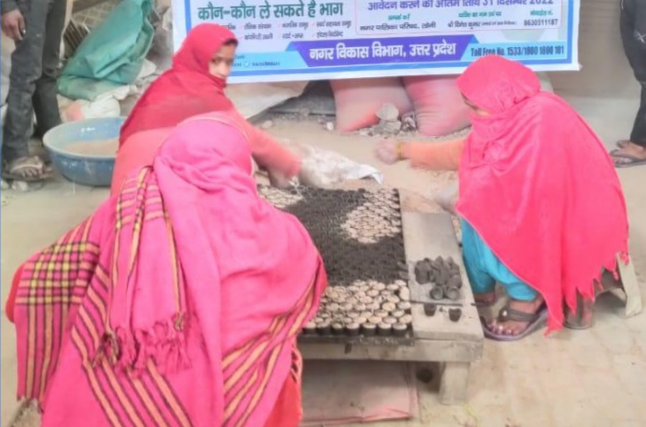
In Loni, Uttar Pradesh, a group of women has turned a waste-management challenge into a livelihood opportunity. Around gaushalas and dairies, cow dung can pose difficulties by clogging drains and sewage channels. In Krishna Vihar Colony, however, women began using cow dung to manufacture incense sticks and Loban cups.
What started with eight to ten women gradually expanded. With support from a woman officer of the Loni Nagar Palika Parishad, the producers were connected with gaushala owners for a regular supply of cow dung.
During the summer months, when incense production is at its peak, the initiative provides employment to around 40 to 50 women. The Nagar Palika Parishad also earns up to 25 per cent revenue from the sale of these products.
The initiative also reduces the requirement for wood sawdust, traditionally used as a base for incense products. Mixing around 30 to 35 per cent dry cow dung powder into the products has emerged as an alternative approach to waste utilisation. The products are supplied to markets in Delhi, Mumbai, Punjab, Gujarat and Hyderabad. During the COVID period, orders also reached Mauritius and South Africa.
The women are also exploring other uses of cow dung, including combustible wood for cremation grounds and havans, as well as cow-dung flower pots that can eventually decompose into manure.
In Patna, Bihar, women are playing a central role in organised waste management through the city’s Pink Material Recovery Facility (MRF). Operated primarily by women and led by a female supervisor, the facility processes dry and wet waste, with a capacity to handle two tonnes of dry waste and 1.5 tonnes of wet waste every day.
The facility was established with support from the Patna Municipal Corporation after an initiative aimed at creating greater opportunities for women in the waste-management sector. The ‘Cash for Waste’ initiative further encourages citizen participation by allowing people to bring dry waste and receive payment at prescribed rates.
Patna has also given discarded vehicles a new purpose by converting old, unusable vehicles into mobile Pink Toilets. The initiative reflects the principles of Reduce, Reuse and Recycle while addressing sanitation needs.
Women are also taking cleanliness initiatives directly into communities. In Bhopal, a group of 250 women brand ambassadors has worked with the municipal corporation on cleanliness and waste management. They have established ‘Bartan Banks’ across 25 wards, providing reusable utensils for community functions and helping reduce dependence on single-use plastic.
Another initiative, the 60-member ‘Swachhata Kitty Group’, sees each woman contribute ₹100 every month towards community cleanliness activities.
In Uttarakhand, ‘Bainni Sena’, or the ‘Army of Sisters’, has brought together 570 women across 57 groups to monitor cleanliness activities in their wards. The women interact with citizens, communicate complaints, conduct awareness programmes and support coordination between municipal authorities and sanitation workers.
In Shillong, the Iynnehskhem Self-Help Group has developed a livelihood around composting. The women collect wet waste from households and convert biodegradable waste into compost. After receiving training through a rehabilitation initiative, members moved from waste picking to a more organised composting-based livelihood.
Swachhata is also becoming a platform for greater inclusion. In Odisha, transgender persons have taken up roles in urban sanitation systems. The initiative began in Cuttack, where the Municipal Corporation organised transgender persons into a Self-Help Group, provided training and entrusted them with the operation and maintenance of a Septage Treatment Plant.
The model subsequently expanded across Odisha, with Urban Local Bodies partnering with Self-Help Groups in Faecal Sludge and Septage Management and solid waste management.
In Bhubaneswar, the Swikruti Self-Help Group operates and maintains a 75-KLD Faecal Sludge Treatment Plant at Basuaghai. Members received technical and managerial training before taking up their responsibilities.
For the group’s president, Meghna Sahoo, the initiative has also created a stronger sense of professional identity and recognition. Members now explain their work to students and visitors from national and international institutions, highlighting how employment can create opportunities for greater confidence and participation.
The Bhubaneswar Municipal Corporation has also involved transgender groups in the operation and maintenance of seven cesspool vehicles. Drivers and helpers are to be engaged with minimum applicable wages and provided training in health, hygiene, personal protective equipment and desludging protocols.
These initiatives demonstrate that the impact of Swachhata extends beyond cleaner surroundings. Waste management and sanitation are also creating opportunities for livelihoods, community participation and professional recognition.
As more women and transgender community members become part of sanitation systems, the cleanliness movement is increasingly being shaped not only by infrastructure and services, but also by the people who work at the centre of it.
The post Beyond Cleanliness: Women and Transgender Changemakers Give Swachhata a New Meaning appeared first on DD India.


No Comment! Be the first one.