





Miliband: I won’t resign if government approves Rosebank oil field
Appearing on BBC Radio 4’s Today programme, Miliband was reminded that in 2023 he said the project would be a “colossal waste of taxpayer money and climate vandalism”, external....

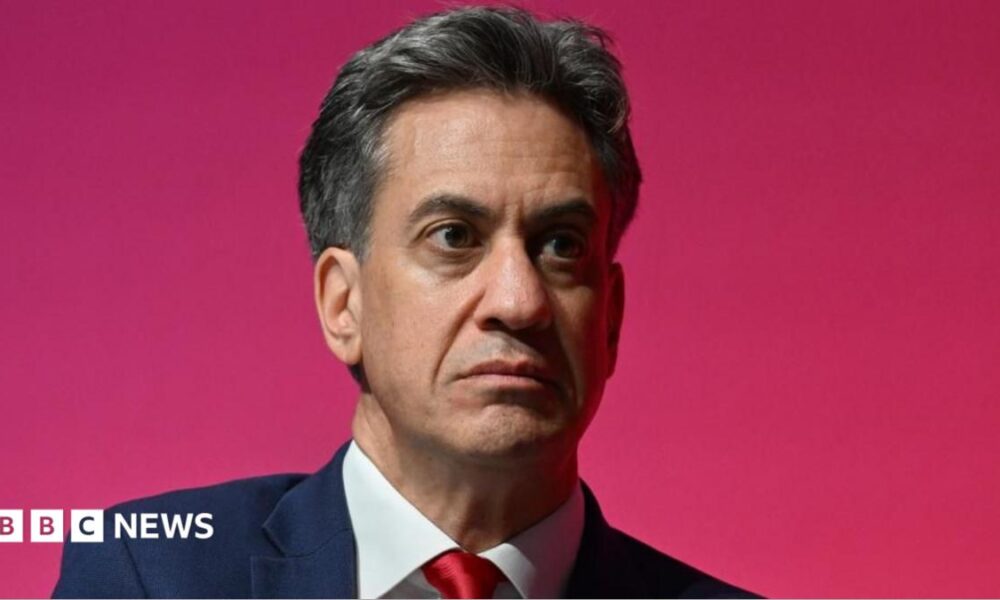
Appearing on BBC Radio 4’s Today programme, Miliband was reminded that in 2023 he said the project would be a “colossal waste of taxpayer money and climate vandalism”, external.
Asked if it could be assumed he would resign if his successor decided to develop Rosebank, Miliband replied: “No, definitely not because I obey collective responsibility.
“Miatta Fahnbulleh will make the decision on this. As you know, it’s what they call a quasi-judicial decision so she looks at all the evidence and then reaches a conclusion.”
Miliband said he would not “second guess her decision” on Rosebank.
He added he supported the energy secretary recently giving the green light to the Jackdaw gas field after years of uncertainty and a court case.
Pressed further about his previous remarks on Rosebank, Miliband said: “I’m a member of the government and I will abide by collective responsibility on this.”
He went on to say there are “direct and very bad impacts at home” for the cost of living linked to Russia’s invasion of Ukraine and the Iran conflict.
Miliband added: “What does that teach us? That we can’t get economic and energy security from fossil fuels, we’ve got to keep on with this transition to wind power, solar power, nuclear power; homegrown clean energy we can control.”
Catherine Fookes is among a group of Labour MPs, reported to number at least 75, who have signed a letter opposing Rosebank.
The MP for Monmouthshire told Today: “We need to really look at what we’re doing and ensure we don’t exacerbate our climate challenges and make climate change worse.
“And that’s exactly what drilling in the North Sea would do.”
Steve Yemm, Labour MP for Mansfield, offered his support to Rosebank and said it would be a “test of whether, as a country, we can support investment and skilled work in the North Sea whilst meeting our climate obligations”.
The UK is committed to reaching net zero by 2050 – meaning the UK must cut carbon emissions until it removes as much as it produces – and wants to limit global warming to no more than 1.5C above the pre-industrial period.





No Comment! Be the first one.