





Met Police revises training after fatal A13 collision in Rainham
Coroner Nina Persaud has sent a prevention of future deaths report, raising concerns about the failure to record the correct location. She said the call handler had not added Wennington junction as...

Coroner Nina Persaud has sent a prevention of future deaths report, raising concerns about the failure to record the correct location.
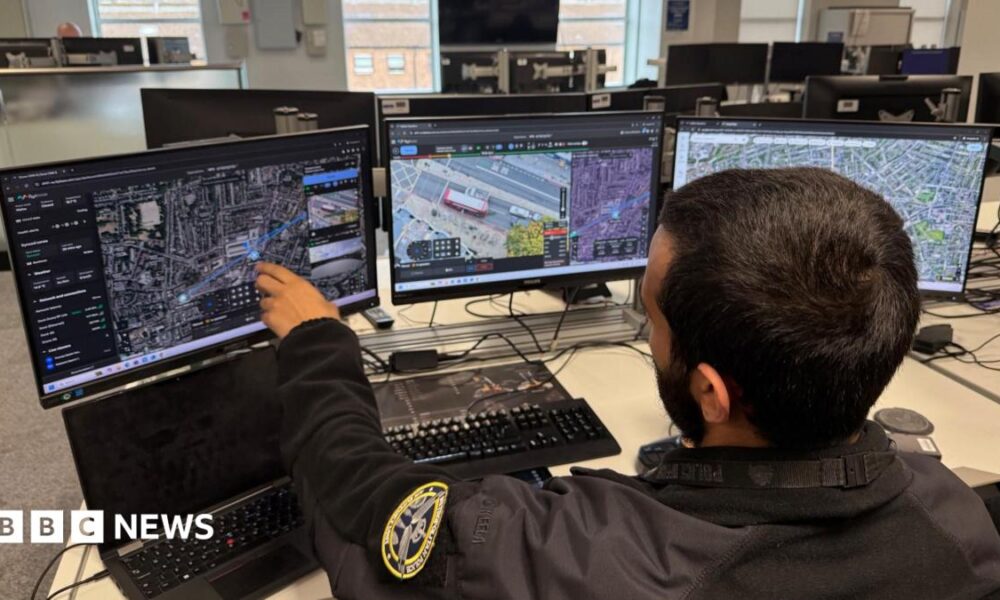
She said the call handler had not added Wennington junction as the location in the “remarks” section and the computer system had incorrectly listed the location as the Dagenham junction between the A13 and the A1306.
It meant the officers were sent to the wrong location and found no trace of the incident despite checking one further junction in each direction.
She wrote: “Had the officers been provided with the correct location, they would likely have arrived before the time of the second collision.
“If they had arrived before the second collision, the officers were trained to park their car in the ‘fend off’ position, so as to slow the traffic in lanes two and three, and minimise the risk to other road users.”
They may also have removed the Ford Transit from the central reservation, she added.
“Therefore, had the MPS officers attended the correct location, it is likely that the fatal collision could have been avoided.”
The mistake was spotted by the force later on the day of the crash, but the supervisory team did not talk to the call handler about it or give feedback, training or additional supervision.
The coroner said there was “a great deal of confusion” about the precise location and a reliance on mobile phone location systems, which could be imprecise and “raise the risk of call handlers not giving full attention to the information provided by the caller”.
She said the precise location was eventually established using the What3words location sharing system.
In its response to the coroner’s concerns, the Metropolitan Police said it “acknowledges the seriousness of the recording error and the absence of immediate supervisory intervention”.
The force added that the call handler, who first learned of the mistake at a meeting with the Met Command and Control (MetCC) inquest team on 24 July 2025, would undertake a structured period of “learning through reflection”.
The call handler has also voluntarily taken part in training material for other operators about the potentially serious consequences of failing to record full details correctly.
The material is being embedded into the MetCC Academy training syllabus and professional development days for staff.
The force added that What3words had now been formally incorporated into its training syllabus, and all new call handlers were trained to request, recognise and use the codes.
Updated guidance and training makes clear that verbal descriptions from callers must be prioritised and mast data should be treated only as a supplementary indicator.
Training has also been strengthened in mapping skills, triangulation techniques, identifying road networks and landmarks, and using digital tools to verify caller location when information is unclear or inconsistent.
Listen to the best of BBC Radio London on Sounds and follow BBC London on Facebook, external, X, external and Instagram, external. Send your story ideas to [email protected], external




No Comment! Be the first one.