




Qatar’s bold plan to stop next war
In the Gulf, a quiet but urgent push for peace is underway and the clock is ticking. Qatar is driving a bold new regional security initiative comprising a framework of dialogue, confidence-building...

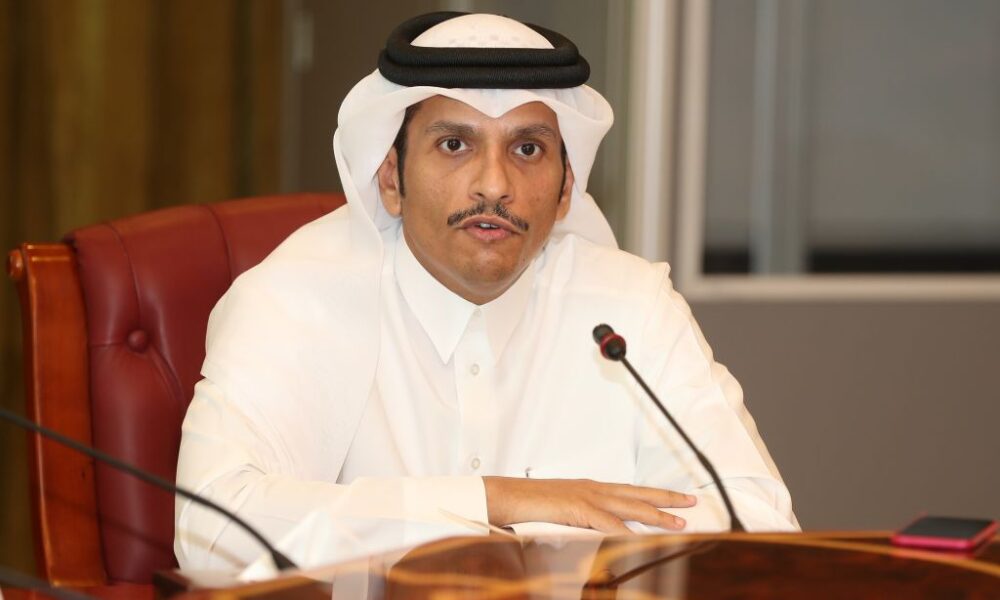
In the Gulf, a quiet but urgent push for peace is underway and the clock is ticking. Qatar is driving a bold new regional security initiative comprising a framework of dialogue, confidence-building measures and a mutual non-aggression pact that would bring all six Gulf Cooperation Council member-states together with Iran and draw in Turkiye and Pakistan as well. The goal is simple: To stop the next war before it starts.
So, what exactly is this pact? At its core, it is a political and security architecture rooted in mutual non-aggression. A formal commitment that no participating State will threaten or attack another; respect for sovereignty and territorial integrity; encourage dialogue mechanisms and economic interdependence; and a shared interest in keeping the Strait of Hormuz open and energy flowing. Put simply: regional ownership of regional security; not perpetual dependence on external security guarantees.
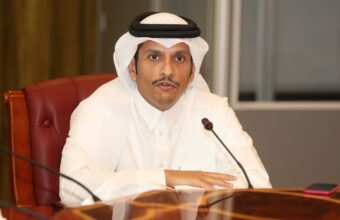
The political direction was set by Qatar’s Prime Minister and Foreign Minister, Sheikh Mohammed bin Abdulrahman Al Thani, on the margins of the U.N. General Assembly in September. He called the Iran war and its consequences a “wake-up call”. He said that the region needed a security framework in which none of the countries poses a threat to the other.
This month, the proposal was repeated at the Global Security Forum in Doha. Qatar’s Deputy Prime Minister and Minister of State for Defence Affairs, Sheikh Saoud bin Abdulrahman Al Thani, announced that Qatar would soon unveil a new regional defence partnership. He also spoke of a domestic defence hub focussing on air-defence, counter-drone systems, cybersecurity, and electronic warfare in consultation with the U.S., the U.K. and France. In his words, diplomacy and military preparedness must go hand in hand.
Qatar would surely know. It sits at the crossroads of energy and geography, hosts the largest U.S. base in the region, maintains contacts with Iran even after attacks on its soil and also knows that another round of conflict would hammer global energy markets harder still. Qatar’s message is pragmatic: Iran is a neighbour and lasting peace requires addressing mutual security concerns, rebuilding trust and creating economic ties that make war more costly than peace. Just as France and Germany once did after decades of conflict.
At the same time, Qatar is deepening practical defence cooperation. The Badr Memorandum of Understanding signed in Doha on 21st October by Pakistan, Turkiye, Qatar and Indonesia is a case in point. It is a strategic framework to pool military manufacturing, technology, and research. Rather than traditional off-the-shelf procurement, the M.o.U. aims to build long-term domestic industrial capacity. Its core pillars are joint defence manufacturing, technology transfer, collaborative research and development, and military training. Each country brings a strength; Turkiye’s advanced manufacturing and drone expertise, Pakistan’s military engineering, Qatar’s financial investment capacity and Indonesia’s industrial and regional partnership.
This comes just two months after the Makkah Joint Defence Agreement signed by Pakistan, Saudi Arabia and Turkiye. However, the two agreements are different. The Makkah Pact is a collective mutual defence treaty. An attack on one is treated as an attack on all. The Badr M.o.U. is focussed strictly on industrial, technological and economic defence cooperation. It does not include a mutual defence commitment.
What these moves show is a region that’s hedging and networking, even as the diplomatic track advances.
Reactions from other capitals remain cautious. Some see opportunity. Others remain sceptical that Iran will accept meaningful restraints or that trust can be rebuilt quickly enough.
A mutual non-aggression pact is a formal agreement in which States pledge not to use force against one another. It is often paired with mechanisms for consultation and dispute settlement. History offers precedents; some successful, some cautionary. The 1925 Locarno Treaties sought to stabilise Western Europe after the First World War. However, the 1939 Molotov – Ribbentrop Pact bought time but collapsed into war. Qatar’s proposal draws on the more successful models. Think of the 1951 European Coal and Steel Community between France and Germany, which eventually grew into the European Union. Or the ASEAN Way of the 1960s. Or even the 2020 Abraham Accords signed between Israel and the U.A.E., Bahrain, Morocco, Sudan and Kazakhstan.
Will Qatar’s initiative actually bear fruit? Will it bring peace? These are million-dollar questions to which there are no easy answers. The architecture is still aspirational. Success depends on whether the U.S. and Iran can reach an understanding; whether the Gulf States can present a unified front; and whether Tehran sees more to gain from coexistence than from confrontation.
Qatar is clear-eyed: Diplomacy without credible defence is naive but defence without diplomacy is endless. And here is the race against the clock. U.S. President Donald Trump has publicly ruled out new strikes on Iran before the American mid-term elections on 3rd November. However, military planners have prepared options, including potentially heavy conventional strikes. Also, the possibility of renewed action once the votes are counted remains very much alive. Qatar’s push is, therefore, not leisurely statecraft. It is an attempt to lock-in a regional security floor before the next escalation-window opens.
In the end, this is about whether the Gulf can design its own security future or remain permanently hostage to the next crisis. Qatar is betting that neighbours who trade and talk are less likely to shoot. The coming weeks will tell us whether that bet can stick.
Ramesh Ramachandran is a senior consulting editor with D.D. India
The post Qatar’s bold plan to stop next war appeared first on DD India.

No Comment! Be the first one.